
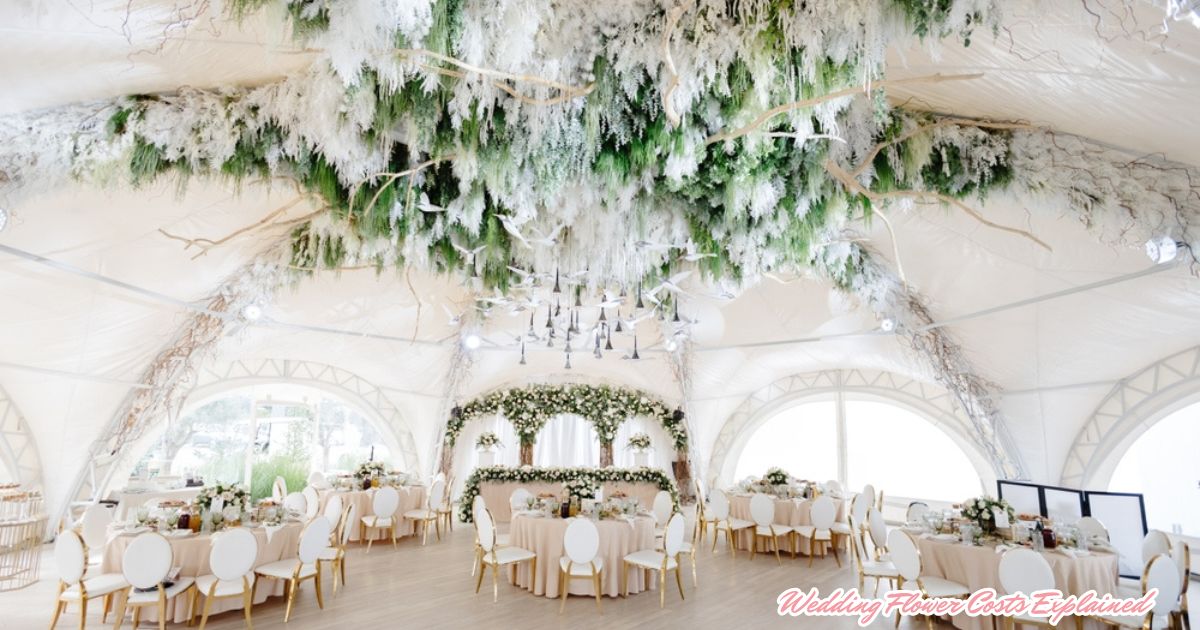
Bloom or Bust? The Ultimate Guide to Wedding Flower Costs
Wedding flowers have a way of stealing the spotlight. Long before the cake is cut or the first dance begins, it’s the flowers that frame the ceremony, soften the lighting, scent the air, and shape the mood of the entire celebration. They appear in every photograph, sit at the center of every table, and travel down the aisle in the bride’s hands. And yet, when couples begin planning, one question quickly surfaces: How much do wedding flower costs actually?
The answer in 2026 is both straightforward and nuanced. Flowers are not just a line item — they are a blend of artistry, logistics, seasonality, and labor. Understanding what drives the cost, where your money truly goes, and how to allocate it strategically can transform floral budgeting from stressful guesswork into confident decision-making. Whether you are planning an intimate gathering or a large-scale celebration, this guide walks you through current pricing, expert insights, and smart ways to maximize beauty without overspending.
The Average Cost of Wedding Flowers in 2026
Most wedding planners and industry surveys continue to recommend allocating 8–10% of your total wedding budget to flowers and décor.
In 2026, here’s what that typically looks like in the United States:
-
Low to modest floral budget: $1,500–$3,000
-
Mid-range wedding florals: $4,000–$7,000
-
Elevated or luxury designs: $8,000–$15,000+
According to Fash’s updated 2025–2026 cost guide, the national average for wedding flowers ranges between $2,000 and $7,000, depending on guest count, floral density, and design complexity.
Major metropolitan areas such as New York, Los Angeles, and Chicago tend to skew higher due to labor and venue access costs. Rural or small-city weddings may fall below national averages.
What You Are Really Paying For
A common misconception is that floral budgets are driven purely by the cost of stems. In reality, flowers themselves are only part of the equation.
A typical professional florist’s pricing structure includes:
-
30–40% Fresh flowers and greenery
-
30–35% Labor (design, prep, transport, installation)
-
10–20% Rentals (vases, arches, mechanics, candles)
-
10–15% Delivery, setup, strike, and overhead
Installation-heavy designs — suspended florals, arches, statement backdrops — can require several hours of on-site labor. That labor is often the largest hidden cost couples underestimate.
Understanding this breakdown helps shift the mindset from “Why are flowers so expensive?” to “This is a full-service design production.”
Itemized Wedding Flower Costs in 2026
Here is what couples can realistically expect to pay per floral element this year:
Personal Flowers
-
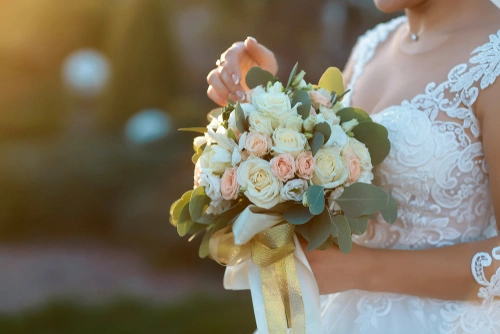
Bridal bouquet: $150–$350+
-
Bridesmaids’ bouquets: $75–$150 each
-
Boutonnieres: $15–$35 each
-
Corsages: $25–$45 each
-
Flower crown or hair florals: $50–$150
-
Flower girl petals or mini bouquet: $25–$60
(Source: Fash 2026 cost data, https://fash.com/costs/wedding-flowers-cost)
Premium blooms such as peonies, garden roses, orchids, and specialty ranunculus significantly increase bouquet pricing.
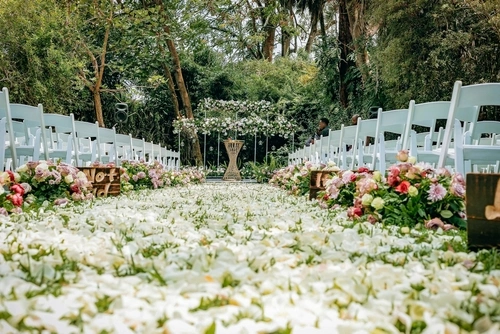
Ceremony Flowers
-
Altar arrangements: $200–$800 each
-
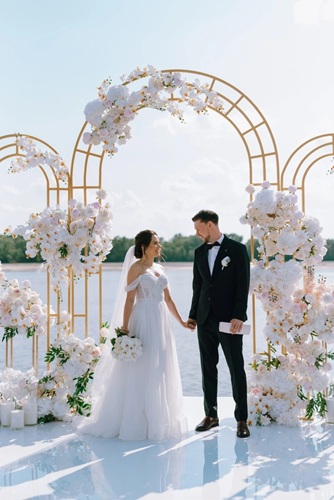
Floral ceremony arch: $1,000–$3,000+
-
Aisle markers: $30–$75 each
-
Petal-lined aisle: $100–$300
Large floral installations are among the biggest drivers of overall floral budgets. A fully covered arch or asymmetrical installation can require hundreds of stems.
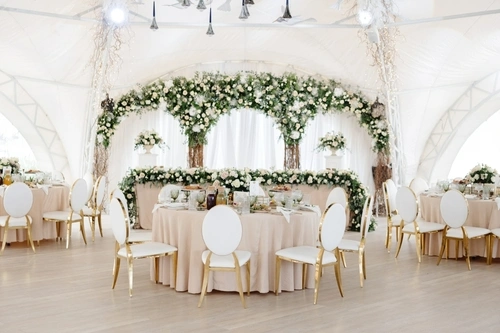
Reception Flowers
-
Guest table centerpieces: $100–$400 each
-
Head table floral runner: $300–$1,500
-
Cake flowers: $50–$200
-
Bar arrangements: $75–$250
-
Statement hanging installations: $1,500–$5,000+
High-impact installations, particularly suspended florals or ceiling treatments, have become increasingly popular but significantly elevate budgets.
What $3,000 vs. $7,000 vs. $12,000 Looks Like
To make the numbers more tangible, here’s how different budgets often translate visually:
Around $3,000
-
Bridal bouquet and 3–4 bridesmaids
-
Boutonnieres and corsages
-
Simple greenery-based centerpieces
-
Repurposed ceremony arrangements
Best for intimate weddings (under 75 guests) or couples prioritizing other vendors.
Around $7,000
-
Premium bridal bouquet
-
Partial floral ceremony arch
-
Elevated centerpieces for 10–15 tables
-
Head table focal arrangement
-
Accent florals for the cake and the welcome table
This range creates a cohesive, photo-ready aesthetic without excessive installations.
$12,000 and Beyond
-
Fully floral ceremony backdrop
-
Statement ceiling installation
-
Lush centerpieces at every table
-
Custom floral bar and photo backdrop
Often associated with large guest counts or design-forward venues.

The Biggest Factors That Influence Cost
1. Flower Type
Carnations, mums, and daisies are cost-effective and readily available. Peonies, orchids, and imported garden roses command premium pricing.
Exotic or tropical flowers often require shipping from international growers, increasing cost.
2. Seasonality
In-season flowers are significantly more affordable. For example:
-
Peonies are best priced in late spring.
-
Dahlias peak in late summer and early fall.
Out-of-season blooms must be imported, raising prices.
3. Guest Count
More tables equal more centerpieces. Floral budgets scale quickly with headcount.
4. Venue Logistics
If the ceremony and reception are in different locations, additional delivery and setup fees apply. Restricted access venues or limited setup windows can also increase labor costs.
5. Design Complexity
Hand-tied bouquets are more affordable than cascading bouquets. Dense, layered arrangements cost more than minimalist, airy designs.
Flowers That Photograph Beautifully
Couples often overlook how flowers translate on camera.
-
Larger blooms photograph better than filler-heavy designs.
-
Strong color contrast pops in wide shots.
-
All-white florals can wash out in bright sunlight.
-
Deep tones photograph beautifully in candlelit evening receptions.
Since wedding photography preserves the day, consider how floral scale and color read visually.
Splurge vs. Save: Strategic Floral Spending
Worth the Investment
-
Bridal bouquet (appears in nearly every portrait)
-
Ceremony backdrop
-
Head table florals
Easy to Scale Back
-
Restroom arrangements
-
Guest book table décor
-
Overly elaborate cake florals
-
Pew markers
Prioritizing high-visibility areas ensures maximum impact for each dollar spent.
Seasonal Flowers That Offer Better Value
Choosing flowers by season is one of the most effective ways to manage costs.
Spring
Tulips, ranunculus, sweet peas, and anemones
Summer
Zinnias, cosmos, dahlias, lisianthus
Fall
Mums, marigolds, amaranthus, roses
Winter
Carnations, greenery-heavy designs, anemones
Local sourcing reduces shipping expenses and supports sustainable practices.
Smart Ways to Save Without Sacrificing Style
-
Use greenery as a base to add volume affordably.
-
Repurpose ceremony florals at the reception.
-
Choose bud vases strategically instead of dense arrangements.
-
Book early to secure pricing before peak-season increases.
-
Consider high-quality silk or dried flowers for keepsakes and longevity.
-
Limit the number of floral-heavy tables and mix in candles.
Candles combined with minimal florals create romantic ambiance at lower cost.
2026 Floral Trends
According to wedding industry trend reports, couples are increasingly drawn to:
-
Sustainable, locally sourced flowers
-
Mixed fresh and dried arrangements
-
Textural, garden-style designs
-
Fruit-and-floral tablescapes
-
Minimalist monochrome palettes
Sustainability has become a meaningful priority, with more couples requesting foam-free mechanics and compostable materials.
Common Floral Budget Mistakes
-
Choosing flowers solely based on color, not season
-
Underestimating installation labor
-
Forgetting teardown fees
-
Trying to replicate large-scale Pinterest designs on small budgets
-
Booking too late in peak wedding season
Avoiding these pitfalls can preserve both budget and sanity.
Final Thoughts: Spending With Intention
Wedding flowers are emotional. They transform blank spaces into meaningful settings. They soften architecture, frame vows, and linger in memory long after the day ends. But they are also perishable and temporary — which makes thoughtful budgeting essential.
The key in 2026 is not necessarily spending more. It is spending strategically. When you understand where the money goes, how seasonality works, and which elements carry the most visual weight, you can design a wedding that feels abundant without feeling excessive. Flowers should enhance your story — not overwhelm your finances.
(Reflects national U.S. averages; regional markets may vary.)
Sources:
-
The Knot 2024 Real Weddings Study: https://www.theknot.com/content/average-cost-wedding-flowers
-
Fash Wedding Flower Cost Guide (2025–2026): https://fash.com/costs/wedding-flowers-cost
-
Brides Wedding Flower Pricing Overview: https://www.brides.com/wedding-flower-cost-5071540